
Urban space design. Retractable gate systems
- Fancy Fence Technical Team

- Oct 16, 2025
- 3 min read
Updated: Apr 24
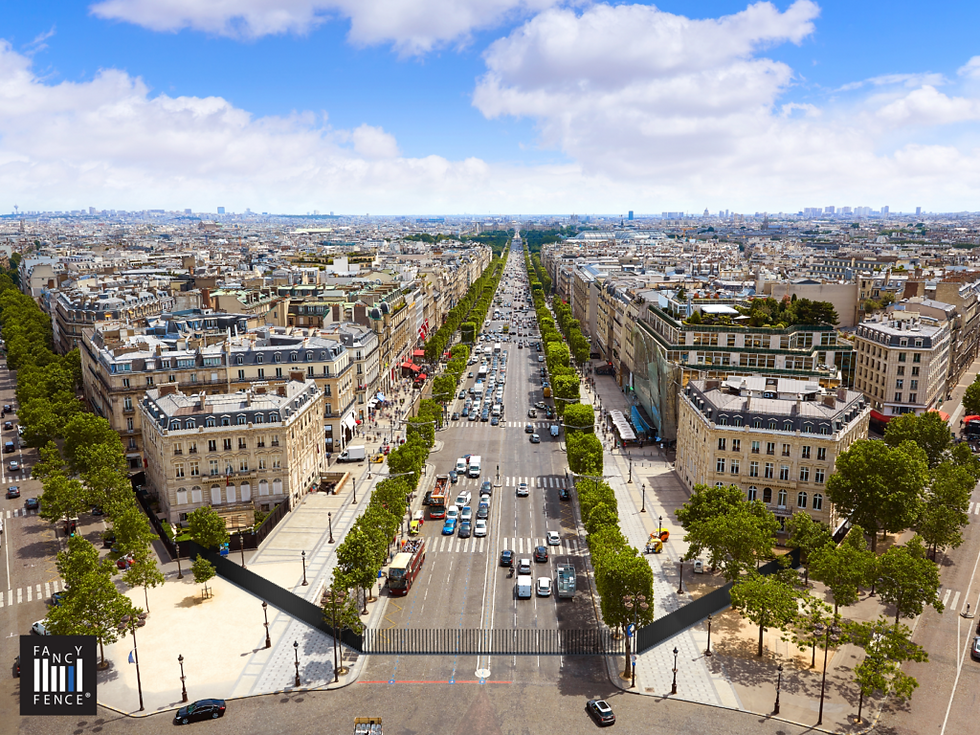
Urban space design requires balancing multiple priorities: visual coherence, functionality, and the practical organisation of vehicle access within a given area. For architects, urban planners, and municipal bodies, getting this balance right is becoming a defining challenge of modern city planning.
Responsible urban space design
Designing public spaces responsibly means thinking beyond appearance alone. It means considering how people and vehicles move through an area, how access is organised during different times of day or during events, and how infrastructure integrates with the architectural character of its surroundings.
Urban spaces: access management and vehicle mitigation systems
Two distinct challenges shape the way cities approach gate infrastructure. The first is everyday access management: organising vehicle entry, defining zones, and maintaining an orderly flow of traffic. The second, relevant only to specific high-risk locations, is the threat of vehicle-based attacks. These two needs require different products and should be communicated separately.
Balanced solutions: underground automatic fences
Retractable gate systems give architects and urban planners the tools to address both challenges. In standard applications, they serve as access control and entrance management solutions, defining boundaries and organising vehicle flow without introducing permanent visual barriers. In high-risk locations, the reinforced HVM version delivers certified hostile vehicle mitigation. Each application requires careful consideration of the project's specific requirements.
This might interest you: FENCING TIMES
Integration of access management and aesthetics
How can a balance between functionality and aesthetics in urban space be achieved? For everyday use, standard retractable gates disappear below ground when not needed, leaving the space visually clean and unobstructed. For locations requiring hostile vehicle mitigation, the reinforced HVM version offers the same discreet form while providing crash-tested anti-ram performance.
Hidden from sight: how underground gate systems preserve urban aesthetics
A key aspect of both versions is that they remain hidden from sight. The underground gate mechanism keeps the entire system out of view, preserving the visual character of the space. In the standard version, this means unobtrusive access control. In the HVM version, the system remains completely hidden below ground level when not in use, and rises to form a visible physical barrier only when vehicle impact protection is required.
Materials and durability
The materials used in the production of retractable gate systems play a crucial role in their longevity. Steel, reinforced concrete, and other durable materials provide reliability across demanding conditions. It is important that they meet the technical requirements of each specific application, whether standard access management or reinforced anti-ram protection.
Collaboration and consultation
Designing well-functioning urban spaces is a task that requires collaboration and consultation. Architects, urban planners, and municipal bodies should work together from the earliest planning stages to identify the right solution for each location. Early involvement of the manufacturer helps ensure that the chosen system fits both the functional needs and the aesthetic vision of the project.
Retractable vs sliding gate: choosing the right solution
Responsible urban space design is a challenge that requires the consideration of many factors. Retractable vs sliding gate solutions each offer distinct advantages, but ground-retractable systems stand out by combining seamless architectural integration with practical access management, while the reinforced HVM version adds certified vehicle impact protection where needed. For architects, urban planners, and all those involved in shaping public spaces, the responsibility lies in choosing the right tool for the right context: smart entrance management for daily use and dedicated anti-ram protection where the threat level demands it.


Comments